
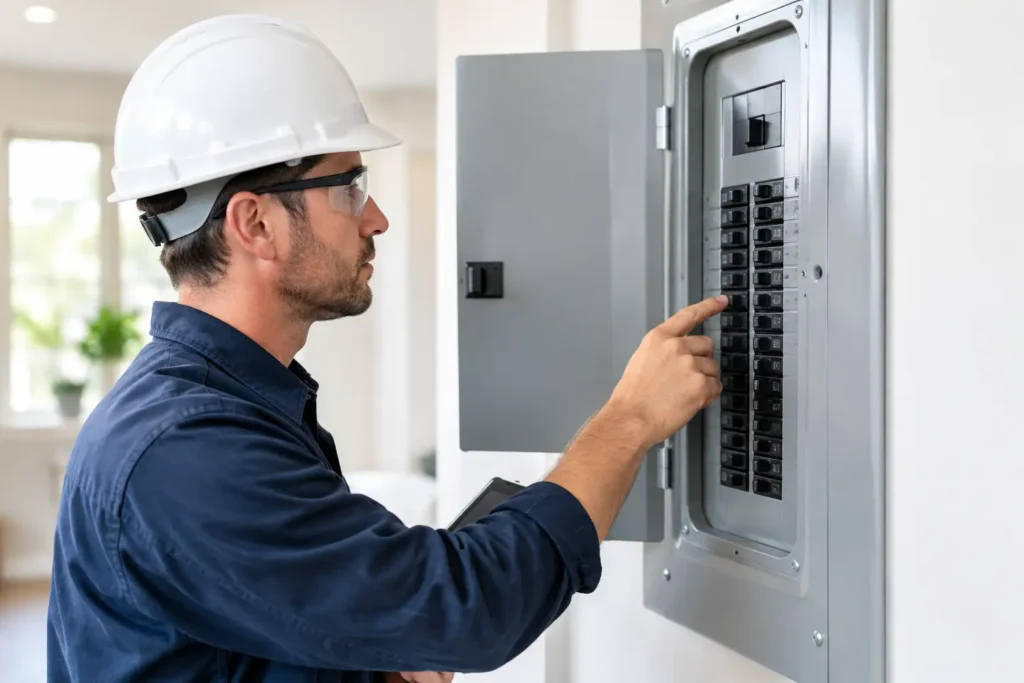
A breaker that trips whenever the microwave, air conditioner, or EV charger runs is not just an everyday annoyance. It can be a sign that your electrical system is being asked to do more than it was designed to handle. An electrical panel upgrade gives your property the capacity to operate modern equipment safely, reliably, and without making you choose which appliance can be on at a given time.
For homeowners, landlords, business owners, and real estate professionals, the panel is often easy to overlook because it sits quietly in a garage, utility area, or electrical room. Yet it is the control center for the entire property. When it is undersized, outdated, damaged, or crowded with added circuits, it can affect safety, renovation plans, daily comfort, and property value.
What an Electrical Panel Upgrade Actually Changes
Your electrical panel receives power from the utility and distributes it to the circuits that serve your building. It contains breakers designed to interrupt power when a circuit is overloaded or develops a fault. A properly sized, professionally installed panel helps each circuit do its job while protecting the wiring behind the walls.
An electrical panel upgrade may involve replacing an older panel with a higher-capacity model, improving the main service equipment, reorganizing or replacing worn components, adding space for new circuits, or installing a subpanel where additional distribution is needed. The right scope depends on the building’s existing service, current load, future plans, and applicable code requirements.
A larger panel is not automatically the answer to every electrical concern. Sometimes the service capacity is adequate, but the panel is full, damaged, poorly configured, or no longer suitable for safe expansion. In other situations, a property needs more capacity because the electrical demand has genuinely changed. A licensed electrician can evaluate the full system rather than guessing based on one symptom.
Signs Your Panel May Need Attention
Frequent breaker trips are one of the clearest signs that a circuit or panel needs professional evaluation. A breaker is doing its protective job when it trips, so repeatedly resetting it is not a solution. The cause could be too much load on one circuit, an appliance issue, wiring concerns, or insufficient capacity for the way the building is now used.
Other warning signs deserve prompt attention as well. These include breakers that feel hot, buzzing or crackling sounds near the panel, a burning smell, visible corrosion, flickering lights when major equipment starts, or a panel cover that cannot be properly secured. Do not ignore these conditions or attempt a repair yourself. Electrical panels contain energized components that require qualified service.
Age also matters, especially in Southern California properties that have been remodeled over several decades. A home or commercial space may have been built for a much smaller electrical load than it carries today. Central air conditioning, modern kitchen equipment, home offices, pool equipment, expanded lighting, ADUs, and electric vehicles can all add demand that the original system was never expected to support.
Projects That Commonly Require More Capacity
Many customers first consider a panel upgrade when they are planning a project, not because something has failed. That is often the best time to assess the electrical system. Planning ahead allows the electrical work to be coordinated with construction, permitting, equipment selection, and the property’s long-term goals.
EV Charger Installation
At-home EV charging is a common reason to evaluate panel capacity. Level 2 charging typically requires a dedicated circuit and can represent a significant continuous electrical load. Some properties have enough available capacity for the charger, while others need load management, a panel upgrade, or service improvements before charging equipment can be installed safely.
The answer depends on more than the panel’s amp rating. An electrician should calculate the building’s existing demand and account for equipment already in use. This helps avoid a costly installation that looks complete but cannot support the charger reliably.
ADUs, Additions, and Renovations
An ADU, room addition, major kitchen renovation, or garage conversion can significantly change a property’s electrical needs. These projects may require new circuits, dedicated equipment connections, additional lighting, and a subpanel or upgraded main panel. Addressing capacity early keeps the project moving and helps prevent last-minute changes after walls are open.
For multifamily properties, the planning is more nuanced. Individual units, common-area loads, shared equipment, metering arrangements, and future tenant needs all affect the right approach. A careful evaluation protects the building owner’s investment while supporting dependable service for occupants.
Commercial Equipment and Tenant Improvements
Businesses often outgrow electrical infrastructure as operations change. New machinery, refrigeration, computers, production equipment, upgraded lighting, or expanded work areas can put pressure on an older system. A panel upgrade can create room for properly protected circuits and help reduce disruptions that interfere with staff, customers, and operations.
For facility managers and landlords, electrical work should be planned around safety and continuity. The best approach may include phased work, clear shutdown coordination, and a panel layout that leaves room for future changes instead of filling every available space on day one.
Safety, Permits, and Professional Workmanship
Panel work is not a cosmetic improvement. It involves high-voltage equipment, utility coordination in some cases, code requirements, and precise connections that must be installed correctly. The goal is not simply to turn the power back on. It is to deliver a system that is safe, clearly organized, correctly rated, and ready for the loads it serves.
A professional electrical panel upgrade typically begins with an assessment of the existing service and equipment. The electrician reviews the panel condition, available capacity, grounding and bonding, circuit needs, and the loads planned for the property. From there, the work can be scoped accurately, including permits and inspections when required.
Cutting corners can create expensive problems. An improperly sized panel, overcrowded equipment, loose connections, or unpermitted modifications can complicate a sale, create insurance concerns, and put people and property at risk. Licensed, bonded, and insured electrical professionals provide the accountability and careful workmanship this type of project requires.
What to Expect During the Upgrade
Every property is different, but a well-managed project starts with clear communication. You should understand what equipment is being replaced, whether service capacity is changing, how long the power interruption may last, and what preparation is needed before work begins.
There may be a temporary power shutdown while the new equipment is installed and tested. For a residence, that may mean planning around refrigeration, internet service, security systems, medical equipment, and work-from-home schedules. For a business, it may require selecting an off-hours installation window or coordinating with tenants and staff.
Once installation is complete, the panel should be clearly labeled so future maintenance and troubleshooting are easier. A clean, organized panel is not merely a nice detail. Accurate labeling helps property owners and electricians identify circuits quickly during maintenance, renovations, or an unexpected electrical issue.
Making a Smart Decision for Your Property
The right time to upgrade is before an overloaded or deteriorating electrical system becomes an emergency. If you are buying or selling a property, preparing for an EV, adding an ADU, renovating, or seeing signs of electrical strain, a professional evaluation can replace uncertainty with a practical plan.
Click Electric helps property owners within the Los Angeles area assess electrical capacity, explain the options in plain language, and complete precision panel installations with safety at the center of the work. A free estimate within an hour can help you move from concern to a clear next step, whether your project is immediate or part of a larger plan.
Your panel should support the way your property is used now and leave room for what comes next. Getting the right evaluation early is one of the simplest ways to protect the people, equipment, and investment that depend on it every day.