
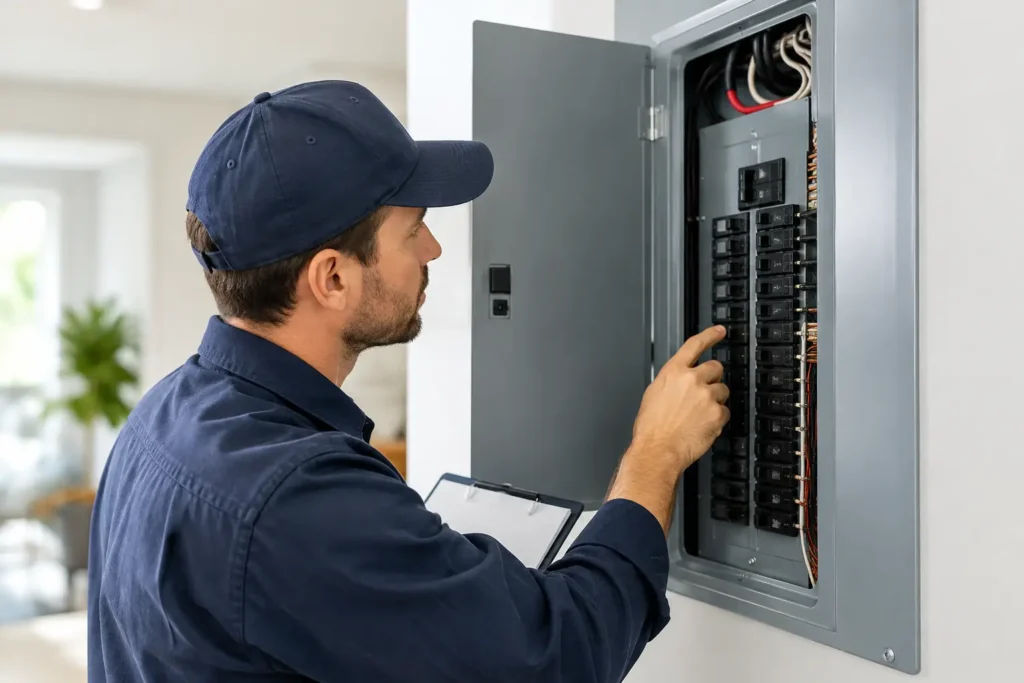
A panel can look perfectly normal from across the garage or utility room while quietly becoming the weak point in a property’s electrical system. Electrical panel lifespan is not determined by age alone. The panel’s condition, capacity, maintenance history, electrical demand, and the quality of its original installation all affect whether it can continue serving a home or business safely.
For Southern California property owners, this matters more than ever. EV chargers, air conditioning, ADUs, remodeled kitchens, home offices, commercial equipment, and added lighting can place demands on an electrical system that was never designed for modern use. Knowing when a panel needs attention helps protect people, equipment, and the value of the property.
How Long Does an Electrical Panel Last?
A properly installed, well-maintained electrical panel often lasts 25 to 40 years. Some panels continue operating beyond that range, while others need replacement sooner because of corrosion, overheating, water exposure, manufacturer defects, or changes in electrical demand.
That range is a planning guideline, not a guarantee. A 15-year-old panel may be undersized after a major renovation or EV charger installation. On the other hand, a 35-year-old panel in excellent condition may still be serviceable if it has adequate capacity and passes a professional inspection.
The real question is not simply, “How old is the panel?” It is, “Can this panel safely and reliably support how the property uses electricity now and in the years ahead?” A licensed electrician can answer that by evaluating the panel, service capacity, breakers, wiring connections, grounding, and load requirements.
What Shortens Electrical Panel Lifespan?
Electrical equipment operates under heat and load. Over time, those forces can wear down components, particularly when a panel is overloaded or exposed to poor conditions. Several factors can shorten the useful life of an electrical panel.
Heavy Electrical Demand
Older homes were not built with today’s electrical habits in mind. A property that once powered a refrigerator, basic lighting, and a few appliances may now support multiple televisions, computers, high-capacity HVAC equipment, smart devices, an electric range, a pool system, and vehicle charging.
When demand regularly approaches or exceeds a panel’s intended capacity, breakers and connections can experience excess heat. A breaker that trips occasionally may be doing its job. Repeated tripping, however, can point to an overloaded circuit, a failing breaker, or a panel that no longer has sufficient capacity.
Moisture, Heat, and Corrosion
Panels installed in garages, exterior locations, utility spaces, and older buildings can be exposed to humidity, leaks, pests, dust, and temperature swings. Corrosion inside a panel is a serious concern because it can affect terminals, bus bars, breaker connections, and grounding components.
Water stains, rust, a damp panel enclosure, or signs of a past leak should never be ignored. Electrical panels are not a place for a wait-and-see approach. A qualified electrician should assess the source of moisture and inspect for damage before the issue develops into a safety hazard.
Poor Installation or Past Modifications
Not all electrical work is completed to the same standard. Loose connections, improperly sized breakers, crowded wiring, incorrect grounding, and unpermitted modifications can all create long-term problems. Even a newer panel may have a shortened service life if it was installed incorrectly or altered without proper planning.
This is especially relevant when purchasing an older home, converting space for an ADU, renovating a commercial suite, or inheriting electrical work from a previous owner. An inspection provides a clearer picture than assumptions based on the panel’s appearance.
Certain Older Panel Brands and Fuse Systems
Some older electrical panels have known safety concerns or may no longer be appropriate for modern electrical demand. Likewise, fuse-based systems can be functional in limited situations but often lack the capacity and convenience needed for current households and businesses.
A panel does not need to be visibly damaged to warrant replacement. If it is an outdated model, has hard-to-source parts, or cannot accommodate safe expansion, an upgrade may be the practical choice.
Warning Signs Your Electrical Panel Needs Attention
A panel rarely announces a problem with one obvious symptom. More often, property owners notice small changes in how the electrical system performs. If you experience any of the following, schedule a professional evaluation promptly:
- Breakers that trip repeatedly or will not reset
- Flickering or dimming lights when large appliances start
- A burning smell, buzzing sound, warmth, or discoloration around the panel
- Rust, water damage, loose breakers, or visible corrosion
- A panel that is full with no room for future circuits
- Frequent reliance on extension cords or power strips because the electrical system does not meet the property’s needs
Warmth, burning odors, crackling sounds, or visible smoke require immediate attention. Do not repeatedly reset a breaker or open the panel to investigate. Turn off power if it can be done safely, move away from the area, and contact a licensed electrician or emergency services as appropriate.
Electrical Panel Lifespan and Capacity Are Different Issues
A panel can be relatively new and still need an upgrade. This is one of the most common points of confusion for property owners. Lifespan refers to the condition and age of the equipment. Capacity refers to how much electrical service the property can safely support.
For example, a homeowner may have installed a 100-amp panel years ago. The panel itself could be in good condition, but the household may now need additional power for central air conditioning, an electric vehicle charger, an induction range, a remodel, or an ADU. Adding circuits without confirming the load calculation can create problems even if there are open spaces in the panel.
Commercial properties face a similar challenge. A retail space, office, studio, or multifamily building may change tenants, add equipment, expand operations, or upgrade lighting. What worked for the prior use may not safely support the next one.
A professional load calculation helps determine whether an existing panel can accommodate the planned work or whether a main panel upgrade, subpanel installation, or service upgrade is needed. The right solution depends on the building’s current load, future plans, utility service, and local code requirements.
When an Upgrade Makes More Sense Than a Repair
A repair can be appropriate when the issue is isolated, such as a damaged breaker, loose connection, or minor component problem in an otherwise safe and adequately sized panel. Repairing a sound system is often the most cost-effective choice.
An upgrade is usually the wiser investment when the panel has widespread corrosion, outdated equipment, recurring overload issues, insufficient capacity, safety concerns, or no practical room for expansion. It can also make sense before a renovation instead of after the walls are closed and the project becomes more complicated.
For real estate agents, buyers, sellers, and landlords, a panel evaluation can also prevent delays during inspections and negotiations. Addressing an aging or undersized panel early gives everyone a clearer understanding of the property’s electrical condition and likely upgrade needs.
Protecting Your Panel and Planning Ahead
You cannot stop electrical equipment from aging, but you can reduce surprises. Avoid overloading circuits, pay attention to changes in electrical performance, and have the system assessed before adding major loads. Keep the panel accessible, clearly labeled, and free from storage that could block safe access during an emergency or service visit.
It is also smart to plan electrical work as part of larger property decisions. If you are considering an ADU, remodel, EV charger, business expansion, or major appliance conversion, include a panel assessment at the beginning. Planning ahead can prevent costly redesigns and help ensure the finished project has the capacity to perform reliably.
Click Electric provides licensed, bonded, and insured electrical evaluations, precision panel installations, upgrades, and subpanel solutions for homes and businesses within the Los Angeles area. A qualified assessment can identify whether your panel has years of reliable service left or whether now is the right time to make a safer, more capable change.
Your electrical panel should support the way you live or operate, not limit it. If its age, condition, or capacity is uncertain, a professional inspection and a fast, free estimate can replace uncertainty with a clear path forward.