
A burning odor near a wall, a panel that feels hot, or lights that suddenly pulse throughout a building are not problems to monitor overnight. Emergency electrical repair is about protecting people and property when an electrical issue creates an immediate risk of shock, fire, equipment damage, or a serious loss of power.
For Southern California homeowners, landlords, facility managers, and business owners, the right first move is rarely a quick fix. It is recognizing the warning sign, keeping people clear of the hazard, and bringing in a licensed professional who can identify the source safely.
When Emergency Electrical Repair Is Needed
Not every electrical inconvenience is an emergency. A single light that stops working can often wait for a scheduled service visit. But some conditions can worsen quickly, especially in older properties, buildings with added electrical demand, or spaces affected by water, heat, or damaged wiring.
Call for urgent professional help when you notice a burning smell, smoke, sparks, crackling, buzzing from the electrical panel, or visible scorching around electrical equipment. A panel that is unusually warm, breakers that trip repeatedly, or power that cuts in and out across multiple areas can also point to an overloaded circuit, loose connection, failing component, or damaged wiring.
Water and electricity require special caution. If flooding, a roof leak, plumbing failure, or storm damage reaches electrical equipment or wiring, do not touch the affected area. Shut off power only if you can do so without approaching water or damaged equipment. Otherwise, keep everyone away and call for qualified assistance.
For commercial properties, an emergency may look different. A partial power failure can interrupt refrigeration, security systems, production equipment, tenant operations, or critical lighting. The urgency depends on what is affected and whether the fault presents a safety hazard. A licensed electrician can help determine whether the system can be safely stabilized while a permanent repair is planned.
What to Do Before the Electrician Arrives
The goal is simple: reduce risk without trying to diagnose or repair energized equipment yourself. If you see smoke, flames, or active sparking, leave the area, call 911, and do not re-enter until emergency responders say it is safe. An electrical fire should not be treated like an ordinary fire.
If there is no active fire and the electrical panel is accessible and safe to approach, you may turn off the main breaker. Do not do this if the panel is wet, damaged, hot, producing smoke, or making loud noises. Keep children, tenants, customers, and employees away from the affected space. Avoid using switches, plugging in devices, or resetting a breaker repeatedly.
It also helps to make a few observations from a safe distance. Note when the issue began, what was running at the time, whether there was recent construction or water exposure, and which areas lost power. These details can help an electrician narrow down the source more quickly. They should never come at the cost of getting close to a dangerous panel or exposed wiring.
If the entire property loses power but there are no signs of electrical damage inside, check whether nearby properties are also affected. A utility-side outage is handled differently from an internal electrical fault. Still, if your panel, service equipment, or wiring shows signs of overheating or damage, treat it as an electrical emergency regardless of the neighborhood outage.
Why Electrical Emergencies Need a Professional Diagnosis
Electrical symptoms can be misleading. A tripped breaker may be doing its job by responding to an overload or fault. Resetting it without finding the cause can put stress back on a compromised circuit. Likewise, flickering lights may stem from a local wiring issue, a loose service connection, an overloaded panel, or utility-related conditions.
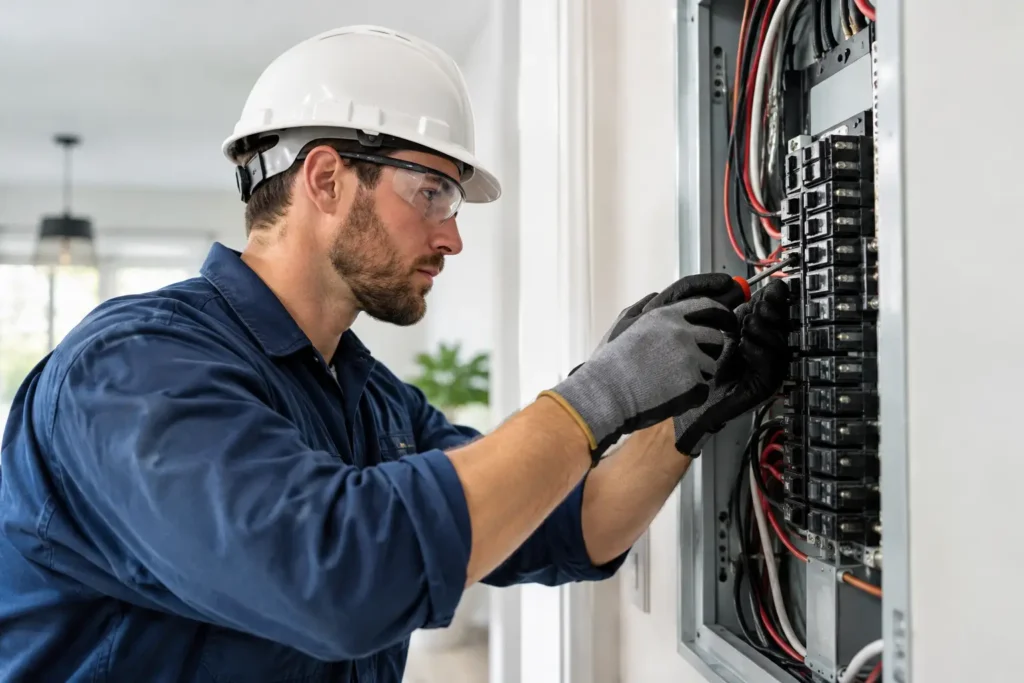
Professional diagnosis starts with safety. A qualified electrician evaluates the panel, circuits, connections, grounding, service equipment, and affected electrical loads to locate the underlying issue. The repair may be relatively contained, such as correcting a damaged connection. In other cases, the emergency exposes a larger need, including panel replacement, rewiring, a subpanel installation, or a service capacity upgrade.
That distinction matters. The fastest repair is not always the safest long-term answer. For example, a panel that is already at capacity may continue to struggle after a temporary issue is corrected, particularly if the property has added an ADU, upgraded appliances, expanded business equipment, or plans for EV charging. A clear explanation of immediate risks and future options lets property owners make a practical decision without guessing.
Common Causes of Urgent Electrical Problems
Electrical emergencies do not always come from one dramatic event. They can develop slowly as connections loosen, systems age, demand increases, or moisture reaches equipment. Older homes and multifamily buildings may have wiring or panels that were never designed for current electrical use. Commercial spaces can face similar strain after tenant improvements, equipment additions, or changes in operating hours.
The most common causes include overloaded circuits, damaged or deteriorated wiring, faulty panel components, loose electrical connections, water intrusion, storm-related damage, and improper past work. Rodent damage can also affect concealed wiring, while heat and vibration can gradually compromise connections in busy commercial environments.
A recent remodel or new equipment installation can be relevant too. Electrical systems need to be designed around the actual load a property will carry. Adding an EV charger, expanding an ADU, installing specialized studio equipment, or upgrading business operations may require more than an additional circuit. It may call for a panel capacity review and a properly planned electrical upgrade.
Emergency Repair Versus a Planned Upgrade
An emergency visit focuses first on making the situation safe. That could mean isolating a failed circuit, repairing a damaged component, restoring power to essential areas, or replacing equipment that cannot remain in service. Once the immediate hazard is controlled, the next step is deciding whether the repair fully resolves the issue.
Sometimes it does. A clearly identified and isolated failure can be repaired without major changes to the rest of the system. Other times, the event reveals an electrical system that has reached its practical limit. Repeated breaker trips, an aging panel, insufficient capacity, or wiring that no longer supports the property’s needs may make a planned modernization the more dependable choice.
This is especially relevant for landlords and property managers. Restoring power quickly matters, but so does preventing repeat disruptions for tenants. For real estate agents and buyers, an urgent electrical finding can affect negotiations, timelines, and future renovation plans. A professional assessment provides a more useful path forward than a vague recommendation to “watch it.”
Choosing Help You Can Trust
Electrical emergencies are not the time to rely on unverified repair work or a temporary workaround. Look for a contractor who is licensed, bonded, and insured, communicates clearly about the condition found, and explains the recommended repair in plain language. You should understand what needs attention immediately, what can be scheduled, and what the expected next steps will be.
Click Electric approaches urgent electrical concerns with the same care used for panel upgrades, complete wiring, lighting, ADU projects, subpanels, and EV charging installations. The aim is not simply to get power back on. It is to protect the people using the property and provide a solution that supports safe, reliable electrical service.
Preventing the Next Electrical Emergency
Not every emergency can be predicted, but many warning signs appear before a failure becomes serious. Treat repeated breaker trips, persistent flickering, buzzing equipment, warm electrical panels, and unexplained burning odors as reasons to schedule an inspection. These signs are easier and safer to address before they become an after-hours crisis.
Planned improvements also make a difference. A properly sized panel, organized circuits, code-compliant wiring, and capacity for future electrical demand can reduce stress on the system. For homes, condos, apartment properties, and businesses within 50 miles of Los Angeles, a professional evaluation can turn an uncertain electrical concern into a clear plan.
When electrical conditions feel unsafe, trust that instinct. Keep people clear, avoid do-it-yourself repairs, and get qualified help so the next decision is based on safety rather than urgency.