
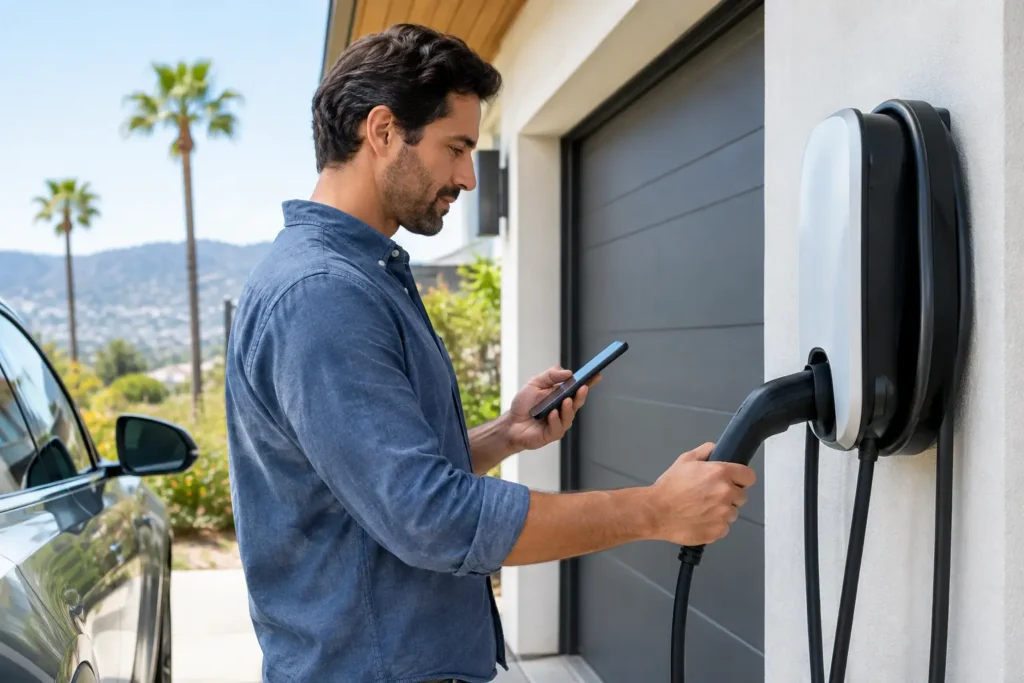
Your new EV may be in the driveway, but the charging project is not truly ready until the electrical work is approved for your property. EV charger permits are often the step that surprises homeowners, landlords, and business owners who expected a simple equipment installation. In reality, a charging circuit can affect panel capacity, wiring protection, load calculations, and the long-term safety of the building.
A permit is not unnecessary paperwork. It creates a documented path for installing charging equipment to local code, with an inspection that verifies the work is safe for daily use. For a home, multifamily property, or commercial site, that protection matters every time a vehicle is connected for hours at a time.
When Are EV Charger Permits Required?
In much of Southern California, installing a hardwired Level 2 charger or adding a dedicated 240-volt circuit requires an electrical permit. The permit requirement generally applies because the project involves new wiring, a new circuit breaker, changes inside the electrical panel, or all three.
A basic plug-in charging setup may have different requirements depending on the equipment, the existing electrical system, and the local authority having jurisdiction. That is why assumptions can create problems. A charger that appears straightforward can still demand more continuous electrical capacity than the home or building has available.
Permit rules are set and enforced locally. Los Angeles County, individual cities, and surrounding jurisdictions may use different application processes, fees, plan requirements, and inspection procedures. The National Electrical Code and California requirements provide the foundation, but the local building department has the final say for a specific address.
Why the Permit Process Protects Your Property
EV charging is a continuous electrical load. Unlike a device used for a few minutes, a vehicle may draw substantial power for several hours. The electrical system must be designed so conductors, breakers, panel components, and protective devices can handle that demand safely.
The permit process requires the installer to consider more than the charger itself. A qualified electrician evaluates the service size, existing electrical demand, available panel space, circuit routing, grounding, and the charger manufacturer’s specifications. If the panel cannot safely support the added load, a panel upgrade, subpanel, or load-management solution may be needed before charging equipment is installed.
This is also why an inspection has real value. An inspector checks that the finished installation matches applicable requirements and that the work is properly protected. That documentation can be useful when selling a property, addressing insurance questions, managing a rental, or planning future electrical improvements.
The EV Charger Permit Process, Step by Step
The process begins with a site assessment. An electrician reviews where the vehicle will park, the location of the electrical panel, the distance to the charging equipment, and the practical path for wiring. For a detached garage, parking area, condo, apartment building, or commercial lot, that route can significantly affect the scope and cost of the project.
Next comes the electrical load calculation. This calculation estimates whether the existing service can support the charger along with heating and cooling equipment, appliances, lighting, and other connected loads. A 200-amp panel does not automatically mean there is enough capacity for any charger. What matters is the actual calculated demand and the condition of the equipment.
Once the scope is clear, permit documents are submitted to the local building department when required. Some jurisdictions allow streamlined online applications for standard residential charging installations. More complex projects, especially multifamily or commercial work, may require additional documentation, site plans, or electrical drawings.
After the permit is issued, the electrician completes the installation and schedules the required inspection. If corrections are requested, they should be addressed before the permit is finalized. A licensed, bonded, and insured contractor can manage these steps and keep the project moving without leaving the property owner to interpret electrical code requirements alone.
Common Issues That Can Delay Approval
The most common delay is insufficient electrical capacity. Older homes may have smaller services, aging panels, limited breaker space, or equipment that is no longer suitable for expansion. In those cases, forcing a charger onto an already crowded system is not a responsible shortcut.
Another issue is charger placement. Charging equipment must be located where it is accessible, protected from damage, and installed according to manufacturer instructions and local requirements. Parking layout, garage conditions, wall construction, and the distance from the panel can all change the installation plan.
For condos, townhomes, and apartment properties, ownership and access add another layer. A resident may own the parking space but not the electrical infrastructure serving it. Homeowners associations, property managers, and building owners may need to approve the work, establish who pays for electricity, or coordinate access to common electrical rooms. The electrical permit does not replace those approvals.
Commercial properties can face additional considerations, including employee or customer access, multiple charging stations, future expansion, ADA-related site planning, and demand on the building’s service. A business may save money by planning for additional chargers during an initial electrical upgrade rather than reopening walls, trenches, or panels later.
Can You Install a Charger Without a Permit?
Skipping a required permit can cost more than obtaining one. Unpermitted electrical work may fail a future property inspection, complicate a sale, create liability concerns after an electrical incident, or require removal and reinstallation before approval can be granted. It can also leave a property owner with no clear record that the charging system was professionally installed.
The temptation is understandable when a charger installation looks small. But the visible equipment is only one part of the job. The safety of the project depends on what is behind the walls, inside the panel, and calculated against the rest of the property’s electrical demand.
A professional assessment is especially valuable when the property has older wiring, a recently added ADU, major electrical equipment, a planned renovation, or an existing panel that trips or shows signs of wear. These factors do not always prevent an EV charger installation, but they may change the right solution.
What Property Owners Should Prepare Before Calling
You do not need to solve the permit process before speaking with an electrician. It helps, however, to know the charger model you are considering, where the vehicle will usually park, and whether you have any photos or details about the electrical panel. If the property is part of an HOA or managed building, gather the association or management contact information early.
For businesses and multifamily owners, think beyond the first charger. Consider who will use it, whether access will be controlled, how charging costs will be handled, and whether more stations are likely within the next few years. Planning for growth can protect the property’s electrical investment and reduce disruption later.
Click Electric helps property owners throughout the Los Angeles area assess charging needs, identify potential panel capacity issues, and complete electrical work with safety and code compliance in mind. The right project begins with an honest evaluation, not a one-size-fits-all answer.
A properly permitted charger gives you more than a convenient place to charge. It gives you confidence that the system supporting your vehicle has been designed, installed, and inspected to protect the people and property that depend on it. If you are considering home, multifamily, or business charging, request a free estimate within an hour and start with a clear plan for safe power.