
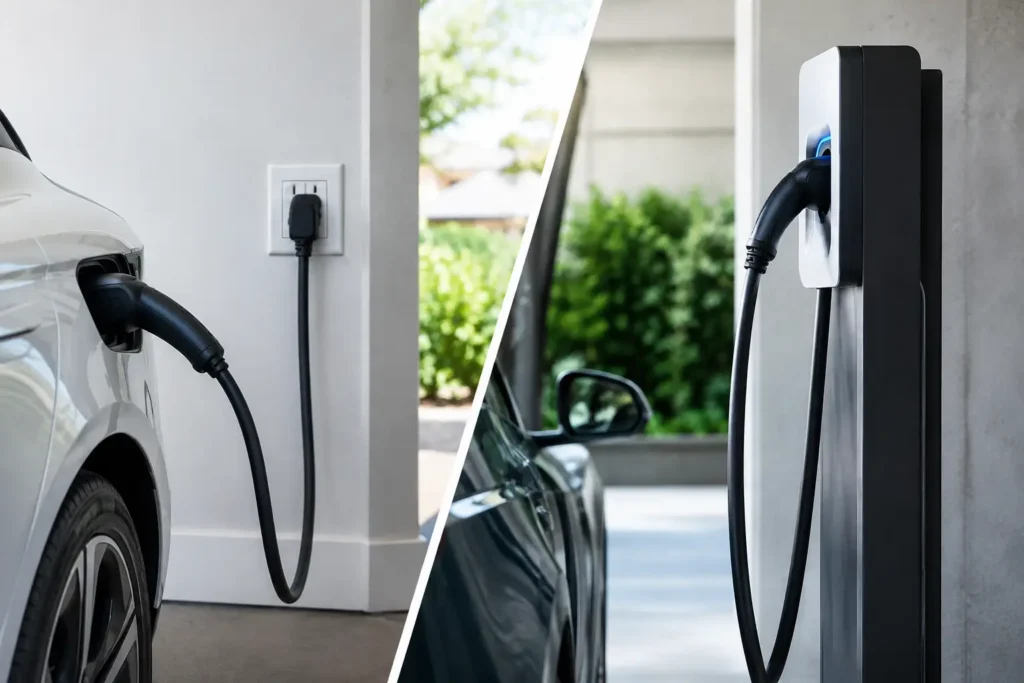
Your EV may have arrived with a Level 1 charging cord, but that does not mean Level 1 is the right long-term solution for your schedule. The choice between level one versus two charging affects how reliably your vehicle is ready each morning, what electrical work your property may need, and how well your home or business is prepared for the future.
For some drivers, the standard cord is perfectly adequate. For others, it becomes frustrating after the first busy week, especially when a long commute, multiple drivers, or back-to-back errands leave little time to recover range. The best choice comes down to your driving habits, available electrical capacity, parking setup, and plans for the property.
Level One Versus Two Charging at a Glance
Level 1 charging uses standard 120-volt household power. It is the slowest common way to charge an EV and typically uses the portable cord that comes with the vehicle. Depending on the vehicle and charging settings, it often adds about 3 to 5 miles of driving range per hour.
Level 2 charging uses 240-volt power, similar to the power required by major household equipment. A professionally installed Level 2 charging station can add roughly 12 to 40 miles of range per hour, depending on the vehicle, charger, circuit size, and electrical capacity available.
That difference is substantial. A Level 1 connection may restore 30 to 50 miles of range during an overnight charge. A Level 2 charger can often replenish a typical day of driving in just a few hours, or fully recharge many vehicles overnight.
Neither option is automatically better for every property. Level 1 offers a lower barrier to getting started. Level 2 offers speed, convenience, and a charging setup that is more likely to support daily EV use without careful planning.
When Level 1 Charging Makes Sense
Level 1 charging can be a practical fit for drivers with short commutes, predictable schedules, and plenty of time parked at home. If you drive 20 or 30 miles most days and leave the vehicle connected overnight, the slower charging rate may keep up with your needs.
It can also work well for a plug-in hybrid with a smaller battery, a second vehicle that is not driven daily, or an EV owner who has dependable workplace charging. In those situations, installing a higher-powered charging station may not provide enough added convenience to justify the project right away.
The trade-off is flexibility. A weekend trip, an unexpected appointment, or several days of heavier driving can create a charging deficit that Level 1 may take days to recover. Portable charging cords are also not intended to be treated casually. The cord, connection point, and electrical circuit must be in good condition, and charging should follow the vehicle manufacturer’s instructions.
For renters, condo owners, and people parking far from their electrical panel, Level 1 may be the immediate option while they work through property approval or plan a more permanent solution. It is a starting point, not necessarily a permanent charging strategy.
Why Many EV Owners Choose Level 2
Level 2 charging changes the routine from “Will I have enough range tomorrow?” to “My car will be ready when I need it.” That peace of mind is the main reason homeowners choose it.
A Level 2 charger is especially useful when you drive more than 40 to 50 miles on a typical day, own a larger-battery EV, share one charging location between multiple vehicles, or want to take advantage of overnight charging schedules. It also gives you a better margin after returning home with a low battery.
Many Level 2 charging stations include useful controls through the vehicle or charger app. You may be able to schedule charging for off-peak hours, monitor energy use, and manage charging access. These features can be helpful, but the electrical installation behind the charger matters more. A quality charger still needs the right dedicated circuit, proper wiring, correct overcurrent protection, and an electrical system that can safely support the added load.
For a home, that may mean installing a new circuit from the main electrical panel or a subpanel near the parking area. For a commercial property or multifamily building, the project may involve planning for multiple charging stations, metering considerations, load management, and future expansion.
Electrical Panel Capacity Is Part of the Decision
The charger is only one part of the project. Before installing Level 2 equipment, a licensed electrician should evaluate the property’s electrical capacity and perform the appropriate load calculation.
Older homes can have panels that were never designed for electric vehicles, central air conditioning, electric appliances, ADUs, and modern electronics all operating together. Even a newer home may have limited available capacity once its existing electrical loads are considered. Adding a charger without properly evaluating the system can overload equipment, cause nuisance tripping, or create a safety concern.
Sometimes the existing panel has adequate capacity and only needs a correctly sized new circuit. Other times, a panel upgrade, subpanel installation, or service upgrade is the safer long-term answer. The right solution depends on the property, not on a one-size-fits-all charger package.
This is particularly relevant in Southern California, where many properties are being renovated, expanded with ADUs, or updated for all-electric appliances. Planning EV charging alongside other electrical improvements can prevent duplicate work and help protect the value of the investment.
Level 2 Installation Is Not a DIY Shortcut
A Level 2 charger operates at higher voltage and can draw significant power for hours at a time. That is why the installation should be designed and completed by a qualified electrical professional, with permits and inspections handled when required.
A proper installation starts with the charger’s specifications and the vehicle’s charging capability. Not every EV accepts the same charging rate, and installing more capacity than the vehicle can use does not always add value. The electrician also considers cable routing, distance from the panel, the charging location, weather exposure, equipment rating, and required clearances.
The goal is not simply to make the charger turn on. The goal is a code-compliant system that performs reliably every night, protects the property, and is ready for real-world use. For shared parking areas, apartments, condos, and commercial sites, clear planning is even more important because parking assignments, access, billing, and future demand can all affect the design.
Choosing the Right Setup for Your Property
Start with how far you drive in a normal week, not just on your shortest commute. Consider whether your household may add another EV, whether you expect to install an ADU, and whether your electrical panel is already supporting major loads. These details determine whether Level 1 is enough for now or whether Level 2 will save time and frustration from day one.
For a single-family home with off-street parking, Level 2 is often the most convenient long-term option. For a condo or townhouse, approval rules and shared electrical infrastructure may shape the solution. For landlords and property managers, installing infrastructure with future charging demand in mind can be more cost-effective than addressing each request separately.
Click Electric can assess your electrical panel, parking layout, and charging goals before recommending the right path. As a licensed, bonded, and insured electrical contractor, the focus is on a safe installation that fits the property rather than pushing equipment that does not match your needs.
A thoughtful charging plan should make owning an EV easier, not add another item to manage. Whether Level 1 covers your routine or Level 2 is the better upgrade, a professional assessment gives you a clear answer before you invest.