
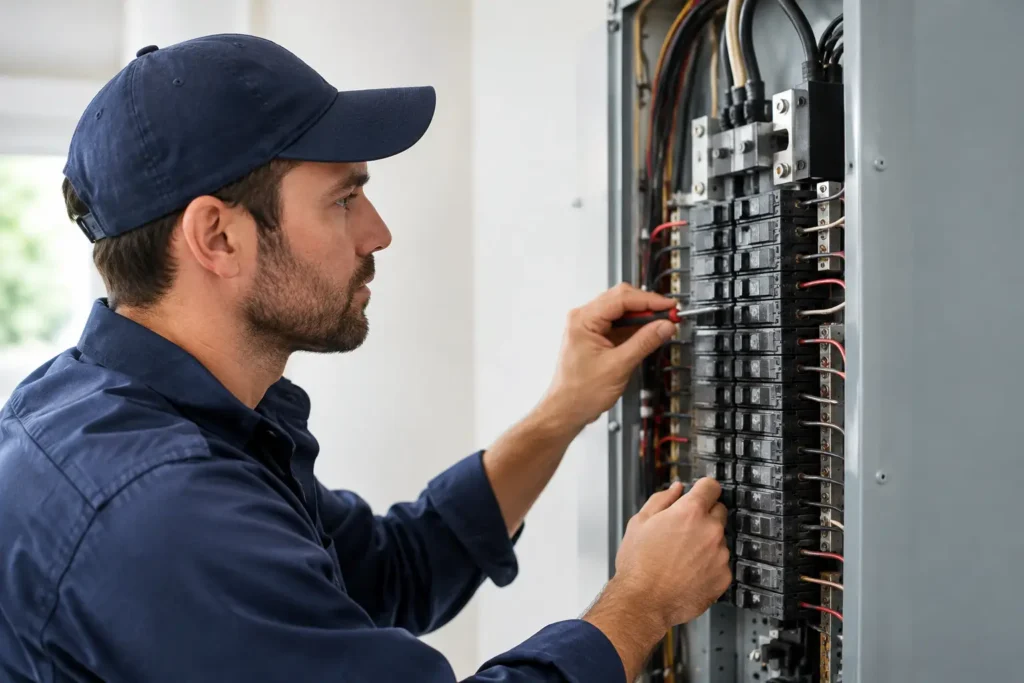
A panel can appear perfectly normal from across the garage while carrying more demand than it was designed to handle. If you are asking, when should I replace my electrical panel, the answer often comes down to safety, capacity, and the plans you have for the property – not just whether the lights still turn on.
Your electrical panel is the control center for the building’s power. It directs electricity to circuits throughout your home, ADU, apartment building, office, or commercial space, and it is designed to trip a breaker when a circuit is overloaded. When the panel is outdated, damaged, undersized, or unreliable, it can affect daily comfort and create a serious safety concern.
When Should I Replace My Electrical Panel? Key Warning Signs
Some panel issues need prompt professional attention. Others are signals to plan an upgrade before a remodel, EV charger installation, or business expansion places more strain on the system. Either way, avoid treating repeated electrical trouble as something you simply have to live with.
Breakers trip often or will not stay reset
A breaker trips to protect wiring from an unsafe overload or fault. An occasional trip after running too many high-demand appliances on one circuit can happen. But frequent tripping, breakers that immediately trip again after being reset, or breakers that feel loose can point to overloaded circuits, a failing breaker, damaged wiring, or a panel that no longer fits the property’s electrical needs.
Do not force a breaker to stay on or replace it with a larger breaker without a licensed electrician’s evaluation. The breaker size must match the wiring and circuit design. Increasing it incorrectly can allow wires to overheat before the breaker responds.
The panel is warm, noisy, corroded, or visibly damaged
A panel should not smell burnt, feel hot, make buzzing or crackling sounds, or show scorch marks. Rust, water stains, corrosion, melted insulation, or damaged components also deserve immediate attention. Water intrusion is especially concerning because it can degrade connections and create unpredictable electrical faults.
If you notice smoke, a burning odor, sparking, or excessive heat, keep clear of the panel and contact a qualified electrician promptly. If there is an immediate fire risk, call emergency services first.
You still have fuses or a known obsolete panel type
A fuse box is not automatically unsafe, but it may be too limited for a modern property’s electrical demand. It can also be difficult to find properly rated replacement parts, and improper fuse replacement can create hazards.
Some older panel brands and equipment lines have documented reliability concerns. In Southern California, electricians often encounter older Zinsco and Federal Pacific Electric panels in homes and multifamily properties. The presence of one does not tell the whole story of a system’s condition, but it is a strong reason to schedule a professional inspection and discuss replacement options.
Your lights flicker or power behaves inconsistently
Lights that dim or flicker when high-demand equipment starts may indicate a capacity issue, loose connection, wiring concern, or utility-side problem. A single bulb can be the issue, but widespread flickering or an ongoing pattern across several areas of the property should not be ignored.
Other signs include circuits that stop working without a clear reason, breakers that feel unusually warm, or power that cuts out in part of the building. A licensed electrician can determine whether the issue is within the panel, the branch wiring, the meter equipment, or the utility service.
Capacity Is Often the Real Reason for a Panel Upgrade
Many replacements are planned upgrades rather than emergency repairs. A panel that suited a smaller home decades ago may not have enough capacity or circuit space for how the property is used now.
Modern electrical demand can increase quickly with central air conditioning, electric ranges, laundry equipment, home offices, workshops, pool equipment, ADUs, and at-home EV charging. Commercial properties may add specialized equipment, upgraded lighting, tenant improvements, or technology that requires dedicated circuits. A panel can have unused breaker spaces and still be undersized for the actual load.
Before an EV charger, renovation, or ADU project
An EV charger is one of the most common reasons to assess panel capacity. Level 2 charging typically requires a dedicated circuit and adds a continuous electrical load that must be calculated correctly. A qualified electrician reviews the service size, existing demand, available breaker space, wiring pathways, and equipment requirements before recommending the right solution.
The same planning matters before a kitchen renovation, major addition, ADU build, or commercial build-out. Addressing panel capacity during project planning is usually more efficient than discovering a limitation after walls are open or permits are already underway.
For some properties, a subpanel is the practical answer for distributing circuits to a new area. For others, the main service and panel need to be upgraded first. The right approach depends on the load calculation, the existing equipment, code requirements, and the goals for the property.
When breaker spaces are full
A crowded panel is not always a failure, but it limits your options. If every space is occupied and you need new dedicated circuits, a professional can evaluate whether the panel can safely accept approved equipment or whether replacement is the better long-term choice.
Avoid informal fixes such as overstuffing the panel or relying on unapproved breaker arrangements. Clean, code-compliant panel work protects the system and makes future maintenance much easier for homeowners, property managers, inspectors, and prospective buyers.
Age Matters, but Condition Matters More
There is no universal expiration date for an electrical panel. A well-installed panel in a dry, protected environment may serve a property for decades, while another may need replacement earlier because of corrosion, poor workmanship, physical damage, or higher electrical demand.
That said, panels installed 25 to 40 years ago deserve a closer look, particularly if the property has been remodeled or its electrical loads have changed significantly. Older homes may also have service sizes that were reasonable when installed but are no longer practical for current lifestyles.
A professional assessment is more useful than replacing a panel solely because of its age. An electrician can inspect the equipment, look for overheating or deterioration, confirm grounding and bonding, evaluate breaker condition, and perform a load calculation. This gives you a clear recommendation based on the property rather than a guess.
Panel Replacement Can Protect a Sale, Rental, or Business Operation
Electrical panel concerns often surface during a real estate transaction, property inspection, insurance review, or tenant improvement project. Buyers may hesitate when they see outdated equipment, and sellers can face delays if an inspection identifies a safety concern. For landlords and property managers, a dependable panel helps support safe, consistent service for occupants and reduces the risk of disruptive electrical issues.
Business owners have an additional concern: downtime. If a panel cannot support essential equipment or shows signs of failure, waiting until it becomes an emergency can interrupt operations. Planning an upgrade around business hours, construction schedules, or tenant turnover gives you more control over the project.
What a Professional Panel Evaluation Should Include
A proper evaluation is more than a quick look at the breakers. Your electrician should review the panel’s condition, service rating, circuit layout, visible wiring condition, grounding and bonding, available capacity, and the electrical loads you plan to add.
They should also explain whether the recommendation is a repair, a panel replacement, a service upgrade, or a subpanel installation. These are different solutions with different costs and scopes. Clear options let you make a decision that protects the property without paying for work that does not solve the underlying problem.
Permits and inspection requirements may apply to panel and service upgrades. Working with a licensed, bonded, and insured electrical contractor helps ensure the installation is completed to applicable code and documented properly. That matters for safety today and for future remodeling, refinancing, insurance, or resale.
Click Electric provides careful panel evaluations and precision panel installations for residential and commercial properties within 50 miles of Los Angeles. The goal is not to pressure you into a replacement. It is to identify what your electrical system needs, explain the available options plainly, and complete the work with the care your property deserves.
If your panel shows warning signs, lacks room for the next project, or has not been evaluated since you bought the property, schedule an assessment before a small limitation becomes an urgent disruption. A clear professional recommendation can give you the confidence to move forward safely.