
A flickering bank of lights, a panel that feels warm, or breakers that trip during normal business hours are not minor interruptions. They can affect employee safety, customer experience, equipment reliability, and your ability to keep operating. A qualified commercial electrical contractor helps property owners and managers identify the cause, make code-conscious repairs and upgrades, and plan electrical improvements that support the way a building is actually used.
For a retail space, office, multifamily property, studio, warehouse, or new commercial build, electrical work is rarely just about restoring power. It is about protecting the people inside the building and the investment behind it.
What a Commercial Electrical Contractor Does
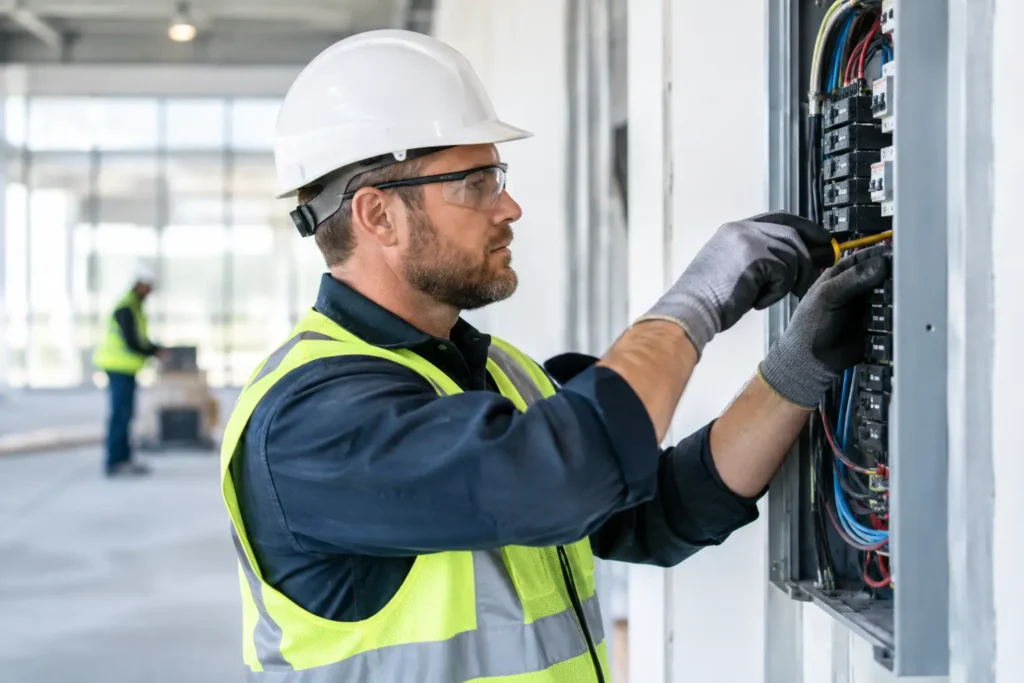
A commercial electrical contractor installs, upgrades, and services the electrical systems that keep business properties functional. That can include electrical panels and subpanels, building wiring, interior and exterior lighting, dedicated circuits for equipment, tenant improvements, safety-focused troubleshooting, and EV charging infrastructure.
The right scope depends on the building and the goal. A small office renovation may need new circuits and lighting changes. A multifamily property may need a panel capacity review before adding EV chargers. A landlord preparing a vacant suite for a new tenant may need wiring modified to fit new equipment, layouts, or electrical demands.
Commercial projects also require more coordination than many owners expect. Work may need to happen around customers, tenants, operating hours, other trades, inspections, and the condition of existing infrastructure. A dependable contractor makes the process easier by explaining what needs attention, what can wait, and how the work can be completed with as little disruption as practical.
Signs Your Property Needs Electrical Attention
Electrical problems do not always arrive as a complete outage. Often, the warning signs show up slowly and become part of the daily routine. That is when a manageable issue can turn into a costly interruption.
Frequent breaker trips are one of the clearest signals. A breaker is designed to protect the system, so repeatedly resetting it without determining the cause is not a long-term solution. The issue may be an overloaded circuit, aging equipment, damaged wiring, or a demand level the original system was never designed to handle.
Dimming or flickering lights can also point to more than a lighting fixture problem. When it happens across an area or occurs when large equipment starts, it may indicate a circuit, connection, or capacity concern that deserves professional evaluation.
Other situations that call for a closer look include a panel that is outdated or crowded, heat or unusual buzzing near electrical equipment, renovations that change how a space is used, and plans to add high-demand equipment. Property managers should also consider an electrical assessment when purchasing a building, preparing for a tenant turnover, or responding to items found during an inspection.
Capacity Is the Question Behind Many Upgrades
Businesses add electrical demand over time. More computers, refrigeration, production equipment, security systems, lighting, climate-control components, and vehicle chargers can place a greater load on a system than it was originally built to carry.
An electrical panel upgrade is not automatically necessary every time a business wants to add equipment. Sometimes a dedicated circuit, a subpanel, or a targeted wiring upgrade is the appropriate solution. In other cases, the main electrical service may need more capacity before additional loads can be installed safely.
This is why estimates should begin with a real review of the existing system rather than a one-size-fits-all recommendation. A contractor should consider the building’s current electrical service, available panel space, expected load, condition of wiring, and the requirements of the planned installation. Careful planning helps avoid paying for work that does not solve the underlying limitation.
Planning for EV Charging at Commercial Properties
EV charging is a practical amenity for workplaces, multifamily communities, retail properties, and fleets. It can also be one of the fastest ways to reveal a building’s electrical capacity limits.
A single charger and a multi-unit charging plan are very different projects. The number of chargers, charging speed, parking layout, distance from the electrical service, load management options, and future expansion goals all affect the design. Installing only for today’s need can be sensible for some properties, while others benefit from planning pathways and capacity for future chargers while construction access is easier.
A professional installation should be designed around safety, code requirements, reliable operation, and the property’s long-term plan. That preparation protects the owner from making expensive changes later simply because the original system was not sized with growth in mind.
Lighting Upgrades Should Serve the Space
Commercial lighting influences visibility, productivity, security, and operating costs. A poorly lit parking area can create safety concerns. In a retail setting, uneven or harsh lighting can affect how customers experience the space. In offices and studios, lighting must support the work being done without creating unnecessary glare or energy use.
Modern lighting upgrades can improve performance and reduce maintenance demands, but the best choice depends on the environment. Brightness, color temperature, placement, controls, emergency lighting needs, and operating hours all matter. A warehouse, restaurant, medical office, and apartment common area should not be approached with the same lighting plan.
The goal is not simply to replace fixtures. It is to create a safer, more usable property while making thoughtful decisions about energy use and maintenance.
Why Licensed, Bonded, and Insured Matters
Electrical work affects life safety, property protection, and code compliance. Choosing a licensed, bonded, and insured contractor gives owners and decision-makers an added layer of confidence that the work is being handled by professionals accountable to recognized standards.
This matters especially when work involves panels, service equipment, major wiring, commercial renovations, or occupied buildings. Poor electrical work can create hidden risks behind walls and inside equipment, where a problem may not be obvious until it causes damage, downtime, or an inspection issue.
Professional workmanship also supports clearer communication. You should be able to ask what work is recommended, why it is needed, what disruption to expect, and how the installation will support your property’s needs. Technical terms have a place, but you deserve a plain-English explanation before approving a project.
Questions to Ask Before Hiring a Commercial Electrical Contractor
The first conversation should help you understand both the contractor and the proposed solution. Ask whether the contractor has experience with your type of property and whether the project requires permits, inspections, or coordination with other trades. Discuss access restrictions, tenant schedules, shutdown requirements, and any equipment that cannot lose power unexpectedly.
It is also wise to ask about the condition of your current panel and wiring, not just the immediate task. If a contractor identifies a larger issue, ask what makes it urgent and whether there are phased options. Some improvements should be handled promptly for safety. Others can be planned around budgets, tenant turnover, or a future renovation.
A clear estimate should describe the work in practical terms. It should not leave you guessing whether the price covers the necessary equipment, wiring, panel work, testing, and project coordination. Transparency helps owners compare options based on value and safety, not just the lowest initial number.
Electrical Work That Supports Your Business
Commercial electrical decisions affect more than the utility bill. They influence whether employees can work without interruption, whether tenants can operate their businesses, whether customers feel safe, and whether a property is ready for future demand.
Click Electric serves commercial property owners and decision-makers throughout the Los Angeles area with careful electrical installations, panel upgrades, wiring, lighting, and EV charger solutions. Our licensed, bonded, and insured team focuses on clear recommendations and work that protects your property.
If your electrical system is showing warning signs or your business is planning an expansion, do not wait for a disruption to force the decision. A prompt evaluation and a free estimate within an hour can give you a clearer path forward – and the confidence to make the right next move.