
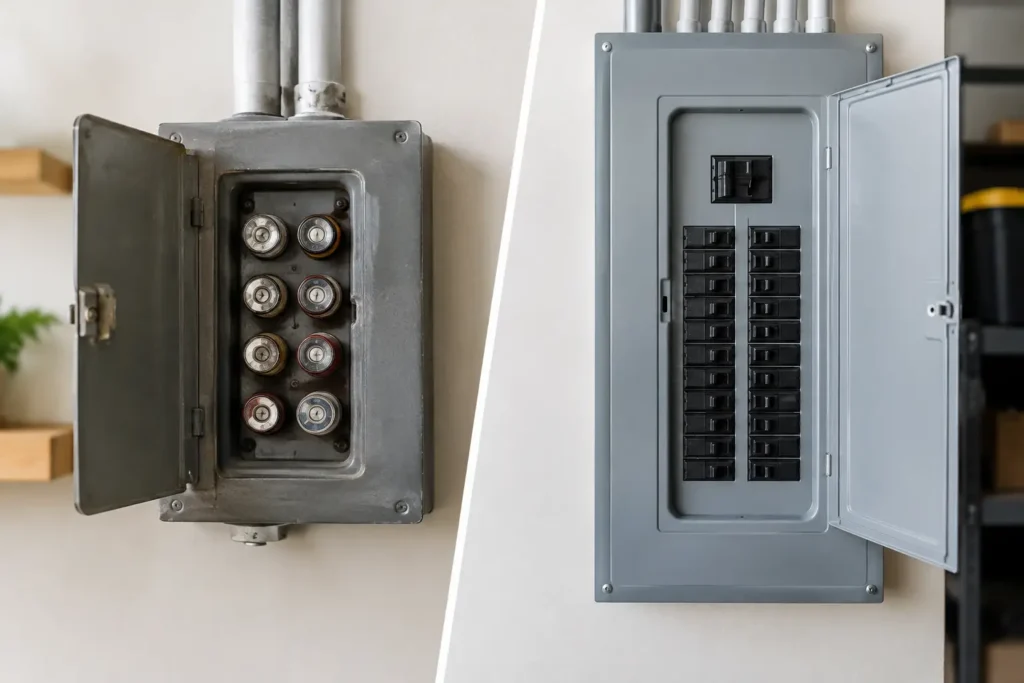
A fuse blows in the middle of a busy day, or a breaker trips every time the air conditioner and microwave run together. These problems can look similar, but the fuse box versus breaker panel question matters when you are protecting a property, planning a remodel, or preparing for higher electrical demand. The right answer is not always “replace it immediately,” but it should always begin with a safety-focused inspection by a licensed electrician.
For many older Southern California homes and commercial properties, the electrical service was designed for a much lighter load than it carries now. Modern appliances, central air conditioning, home offices, ADUs, upgraded lighting, and EV chargers can put real pressure on an aging electrical system. Understanding the difference between fuses and breakers helps you make a clear, informed decision instead of waiting for recurring electrical problems to become a larger project.
Fuse Box Versus Breaker Panel: The Basic Difference
Both fuse boxes and breaker panels have the same essential job: they protect electrical wiring from carrying more current than it can safely handle. When too much electricity moves through a circuit, heat builds up. The protective device interrupts the power before overheating can damage wiring or create a fire risk.
A fuse uses a metal element that melts when current exceeds its rating. Once it blows, it must be replaced with a new fuse of the correct type and amperage. A breaker uses a switch-like device that trips when it detects an overload or fault. After the cause is addressed, a tripped breaker can usually be reset.
That resettable feature is the most visible difference, but it is not the only reason breaker panels are now standard in most new construction and major electrical upgrades. Modern breaker panels can be configured for the electrical needs of a property, support a wider range of protective devices, and make it easier for electricians to identify, isolate, and service individual circuits.
Are Fuse Boxes Unsafe?
A fuse box is not automatically unsafe simply because it is old. A properly maintained fuse panel with correctly sized fuses can still provide overload protection. The concern is usually the condition of the equipment, its available capacity, the quality of past repairs, and whether the system is appropriate for the property’s current electrical demand.
The risk rises when someone replaces a blown fuse with one that has a higher amperage rating than the circuit wiring can safely handle. This can allow wiring to overheat before the fuse opens the circuit. Using makeshift materials in place of a fuse is even more dangerous and requires immediate professional attention.
Older fuse boxes may also have worn components, corrosion, loose connections, outdated grounding arrangements, or limited space for additional circuits. These issues are especially relevant when a property is being renovated, an ADU is added, or a new EV charger is planned. An electrical system can appear to work normally right up until demand exposes its limitations.
A professional inspection can determine whether a fuse box is in sound condition and whether it can remain in service for the time being. If an upgrade is recommended, the goal is not to sell unnecessary work. It is to provide dependable protection and enough capacity for the way the property is actually used.
Why Breaker Panels Fit Modern Properties Better
A modern breaker panel gives a property owner more control and flexibility. Each circuit is protected by a dedicated breaker, and the panel can be clearly labeled so occupants and maintenance teams know what each breaker controls. When a circuit trips, it provides a useful signal that something needs attention rather than requiring a replacement fuse.
Breaker panels also support protective technologies that are valuable in today’s homes and businesses. Depending on the installation and local code requirements, these may include ground-fault and arc-fault protection. These devices are designed to respond to certain hazardous conditions that a standard overload device may not detect as quickly or at all.
Capacity is another major advantage. Many older properties have 60-amp or 100-amp service, while a modern household or business may need more room for new equipment and dedicated circuits. A panel upgrade can provide the capacity needed for an EV charger, HVAC improvements, kitchen renovation, ADU wiring, high-demand equipment, or future expansion. The correct service size depends on a professional load calculation, not a guess based on panel appearance.
For landlords, property managers, and commercial decision-makers, a modern panel can also simplify maintenance. Clear circuit identification and reliable breaker operation make it easier to respond when a tenant or employee reports a power issue. That supports safer operations and helps protect the property investment.
Signs Your Electrical Panel Needs Professional Attention
A fuse box or breaker panel should be inspected promptly if you notice recurring electrical issues. Some warning signs call for faster action because they can indicate overheating, poor connections, or equipment failure.
Watch for breakers that trip repeatedly, fuses that blow often, lights that dim when major equipment starts, buzzing or crackling near the panel, a burning smell, discoloration, warmth around panel components, or visible corrosion. A panel that feels hot should not be ignored. If there is smoke, sparking, or an electrical burning odor, keep people away from the area and seek urgent professional help.
Capacity concerns can be less dramatic but just as significant. You may need an evaluation if your panel has no available space, if you rely on extension cords to support normal property use, or if a planned project will add significant load. A real estate agent may also recommend an electrical review when an older property is being prepared for sale or evaluated during a purchase. Identifying panel limitations early gives buyers and sellers a clearer path forward.
What a Panel Upgrade Actually Involves
An electrical panel upgrade is more than swapping one metal box for another. A qualified electrician evaluates the incoming service, panel condition, grounding and bonding, circuit requirements, load demand, and the condition of related equipment. The work may include a new main panel, new breakers, service equipment upgrades, circuit changes, a subpanel, or corrections needed to meet current code requirements.
Permitting and inspection are important parts of many panel upgrades. They help confirm that the installation is designed and completed to professional standards. In Southern California, requirements can vary by jurisdiction and utility service conditions, which is another reason local experience matters.
There can also be practical planning considerations. Power may need to be shut off during part of the work, and older wiring or existing service equipment can affect the scope. A dependable electrician will explain what is required, what is recommended for future needs, and what the timeline looks like before work begins.
Can You Replace a Fuse Box Yourself?
Replacing fuses with the correct type is one thing. Replacing a fuse box, installing a breaker panel, or working inside energized electrical equipment is not a homeowner project. Panels involve high voltage, utility coordination, grounding, conductor sizing, permits, and code requirements. A mistake can cause severe injury, equipment damage, or an electrical fire.
Even resetting a breaker deserves a little care. If a breaker trips once after an obvious temporary overload, reducing the load and resetting it may be reasonable. If it trips again, will not reset, or trips without a clear cause, leave it off and have the circuit evaluated. Repeated tripping is a protective response, not an inconvenience to work around.
Choosing the Right Next Step for Your Property
If your fuse box has been dependable and your electrical needs are modest, an inspection may confirm that targeted maintenance or a planned future upgrade is the right approach. If you are adding an EV charger, renovating, building an ADU, expanding a business, or dealing with recurring electrical problems, a breaker panel upgrade may offer the safety margin and capacity your property needs.
Click Electric provides licensed, bonded, and insured electrical evaluations and precision panel installations for residential and commercial properties within the greater Los Angeles area. A clear assessment can separate an urgent safety issue from a project that can be planned thoughtfully.
Your electrical panel should give you confidence, not leave you guessing when the next fuse blows or breaker trips. A professional evaluation now can help protect the people in the building, support the improvements you want to make, and keep your property ready for what comes next.