
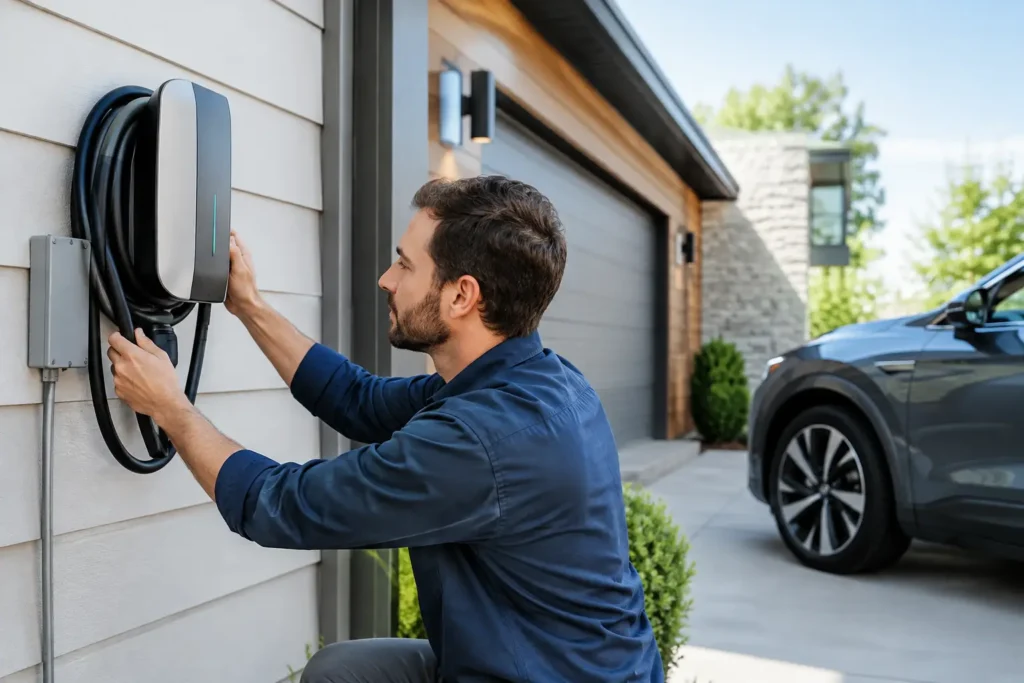
Your new EV may be ready for the road in a day. Your home’s electrical system may need more thought. The best time to prepare home EV charging is before delivery day, when there is time to evaluate your panel, choose a practical charger location, and complete the work safely instead of relying on a temporary charging setup.
For many Southern California homeowners, a professionally installed Level 2 charging station turns EV ownership into a simple routine: pull in, plug in, and wake up with useful range. But the installation is not just about mounting equipment on a wall. It is an electrical project that needs the right capacity, protection, permits, and workmanship for your specific property.
Prepare Home EV Charging by Starting With Capacity
A Level 2 EV charger uses 240-volt power and typically needs a dedicated circuit. The charging speed you can support depends on the charger, the vehicle, the length of the run, and, most of all, the available capacity in your electrical panel.
That distinction matters. A home may have a 200-amp panel and still need a careful load calculation because large appliances, air conditioning, pool equipment, electric cooking, solar equipment, or an ADU can already place significant demand on the system. On the other hand, some homes with smaller service can safely support EV charging with the right approach. The answer is not a guess based on panel size alone.
A licensed electrician should review the existing service, panel condition, breaker space, and the household’s expected electrical loads. This assessment identifies whether the charger can be added directly, whether a subpanel makes sense, or whether an electrical panel upgrade is the safer long-term choice.
Why a load calculation is worth doing
An EV charger is considered a continuous load because it can run for hours at a time. Electrical code accounts for that extended use by requiring the circuit and equipment to be sized appropriately. Proper sizing helps prevent overloaded conductors, nuisance breaker trips, excessive heat, and limits on how you can use the rest of your home.
It also protects future plans. If you expect to add an electric heat pump, induction range, pool equipment, a second EV, or an ADU, mention it during the estimate. Planning for the property you will have in a few years can be more cost-effective than repeatedly modifying electrical work later.
Choose a Charger Location That Works Every Day
The closest possible location is not always the best one. Think about where the vehicle will actually park, which side its charging port is on, and how the cable will reach without becoming a trip hazard or crossing a walkway.
For an attached garage, the charger is often mounted where the cable can comfortably reach the vehicle without stretching. Detached garages, carports, driveways, and side-yard parking can also be good candidates, but they may require a longer underground or exterior wiring route. Longer runs can affect the installation design and cost, so it is helpful to discuss the exact parking position before work begins.
The charger should be installed in a location suited to its listing and environmental rating. Outdoor charging equipment needs weather-appropriate protection, and all locations need a mounting surface and wiring path that are secure, code-compliant, and protected from damage.
If your household has more than one driver, think beyond the first vehicle. A location that works for one parking arrangement may become inconvenient when a second EV arrives. Sometimes installing infrastructure for a future charger during the initial project is a practical investment, even if only one unit is installed now.
Select the Right Charging Level for Your Routine
Level 1 charging uses a standard household connection and can be useful for low-mileage driving or temporary situations. It adds range slowly, which may be enough for someone who drives short distances and has long periods at home.
Level 2 charging is the preferred choice for most homeowners because it provides substantially faster charging. Exact charging speed varies by vehicle and charger. Buying the highest-rated charger does not automatically mean the home or vehicle will charge at that maximum rate. The circuit capacity and the vehicle’s onboard charging capability set the real limit.
A qualified electrician can help match the equipment and circuit to your needs. If you drive 20 to 40 miles most days, you may not need the largest charger available. Choosing a sensible charging rate can leave more capacity for the home while still restoring daily driving range overnight.
Hardwired or plug-in equipment
Both hardwired and plug-in Level 2 chargers can be appropriate when correctly installed. A hardwired unit is directly connected and can be a clean choice for a dedicated charging location. Plug-in equipment can offer flexibility if you later replace the charger, but the circuit, receptacle, and installation still need to be designed for continuous EV charging.
The right choice depends on the equipment, your preferred setup, local code requirements, and future plans. What should not be flexible is the quality of the electrical installation.
Permits and Code Compliance Protect the Property
EV charger installation commonly requires a permit and inspection. While paperwork may seem like an extra step, it helps verify that the circuit, wiring method, overcurrent protection, grounding, equipment placement, and panel work meet current safety standards.
Permitting is especially valuable for homes with older electrical systems, additions, converted garages, or prior work of uncertain quality. It creates a documented record that can be useful to future buyers, real estate agents, insurers, and property stakeholders.
Condo and townhouse owners should also check homeowner association requirements before choosing an installation location. In multifamily buildings, charging projects may involve common areas, shared electrical infrastructure, parking assignments, and coordination with property management. A site review is the best way to identify the practical path forward without making assumptions about who controls the electrical equipment.
Do Not Treat Extension Cords as an EV Charging Plan
It can be tempting to use an extension cord, improvised adapter, or whatever circuit is nearby while waiting for an installation. That creates unnecessary risk. EV charging places a sustained electrical demand on the equipment, and temporary wiring methods are not designed to serve as permanent charging infrastructure.
A dedicated, professionally installed circuit gives the charger the electrical supply it needs without competing with unrelated household equipment. It is a direct investment in reliability, fire safety, and peace of mind.
Watch for warning signs such as a warm panel cover, breakers that trip, flickering lights when major equipment starts, corrosion, damaged wiring, or a panel that is already crowded. These do not automatically prevent an EV charger installation, but they do mean the electrical system deserves a closer look first.
A Simple Way to Plan the Project
Before requesting an estimate, gather a few practical details: the EV make and model if known, the charger you are considering, where you park, the distance from the electrical panel to the desired charger location, and any major electrical additions planned for the home. Photos of the panel and parking area can also help start the conversation.
Then let a qualified electrician inspect the site and explain the options in plain language. You should understand whether your existing panel has capacity, what work is required, how the charger will be supplied, whether permits are needed, and what the finished installation will look like. Clear answers are part of safe, professional service.
Click Electric provides licensed, bonded, and insured electrical service for homeowners and property decision-makers within 50 miles of Los Angeles. A site-specific evaluation can identify the safest route to dependable EV charging, whether that means a dedicated circuit, a subpanel, or a precision panel upgrade.
Your EV should make daily life easier, not create uncertainty about your home’s electrical system. Arrange a professional assessment early, ask about future capacity, and give yourself time to install charging that feels dependable every time you pull into the driveway.