
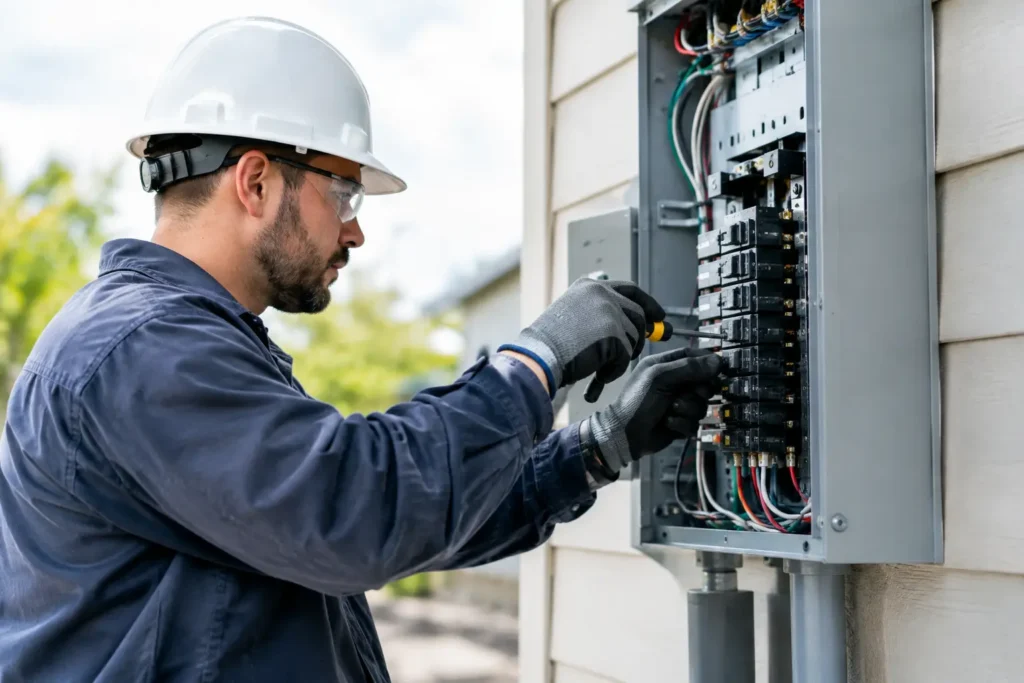
A flickering light, a breaker that trips during normal use, or a panel with no room for a planned remodel can look like a small inconvenience. In reality, each can point to an electrical system that no longer matches the demands of the property. Qualified electrical contractors do more than fix an immediate issue. They assess safety, capacity, code requirements, and the long-term needs of the people who live or work there.
For Southern California property owners, the right electrical partner protects more than wires and equipment. Careful electrical work helps protect occupants, business operations, renovation budgets, property value, and peace of mind.
What Electrical Contractors Actually Do
Electrical contractors plan, install, upgrade, and maintain the systems that distribute safe power throughout a home or commercial property. Their work may involve a targeted improvement, such as new lighting, or a larger project, such as complete wiring for a renovation, ADU, multifamily building, office, studio, or retail space.
The best contractor starts by understanding how the space is used. A homeowner preparing for an electric vehicle may need a charger and additional panel capacity. A landlord may need reliable electrical infrastructure across several units. A business owner may need lighting, dedicated circuits, new equipment wiring, or a subpanel that supports growth without overloading the main service.
That distinction matters. Installing equipment without evaluating the existing electrical system can create avoidable costs or safety concerns later. A professional assessment connects the work being requested to the condition and capacity of the entire system.
When Electrical Contractors Are the Right Call
Some electrical projects are clearly planned: a kitchen renovation, an ADU build, a commercial tenant improvement, or an EV charger installation. Others begin with warning signs that deserve prompt attention. Frequently tripped breakers, warm or discolored panel components, burning odors, buzzing, lights that dim when equipment starts, or an aging fuse-based system should never be ignored.
Not every problem means a full panel replacement is necessary. Sometimes the answer is a new circuit, a subpanel, corrected wiring, or a more targeted upgrade. The point is to have the system evaluated by a licensed professional rather than guessing at the cause.
For real estate agents, buyers, sellers, and property managers, an inspection finding can also create time pressure. Electrical concerns can affect negotiations, financing, occupancy planning, and a closing timeline. Clear recommendations and a written scope of work give everyone a better basis for making decisions.
Panel Capacity Is About More Than Age
An electrical panel is the control center of the property’s power distribution. It is also one of the first areas to review when a property is adding high-demand equipment, expanding square footage, modernizing lighting, or preparing for EV charging.
A panel upgrade may be appropriate when the existing service lacks capacity, the panel has no room for additional circuits, the equipment is obsolete, or the property’s load has changed significantly. A larger home, ADU, home theater, recording studio, commercial workspace, or multiple EV chargers can all change what the electrical system needs to handle.
Still, bigger is not automatically better. The proper panel and service size depend on a load calculation, the building’s equipment, future plans, local requirements, and the condition of existing wiring. Precision panel installations begin with this analysis, not a one-size-fits-all recommendation.
Main Panels and Subpanels Serve Different Purposes
A main panel receives power and distributes it through the property. A subpanel expands distribution to another area, such as an ADU, detached structure, upper floor, workshop, or commercial section of a building. In many projects, a subpanel is an efficient way to deliver power where it is needed without making the electrical system difficult to manage.
The right approach depends on distance, load demand, available capacity, access, and plans for future use. A contractor should explain why a main panel upgrade, subpanel installation, or dedicated circuit is being recommended in straightforward terms.
Wiring and Lighting Should Support the Way You Use a Space
Complete wiring is often part of new construction, major remodeling, ADU development, or the modernization of an older property. It is a chance to build electrical infrastructure around how a space will actually function, instead of forcing modern demands onto an outdated layout.
Good planning considers appliance locations, work areas, lighting zones, entertainment equipment, security systems, EV charging, and potential additions later. For commercial properties, it can also account for equipment loads, operating hours, employee safety, and tenant needs.
Lighting deserves the same level of thought. Well-planned lighting improves visibility, comfort, productivity, and the feel of a space. Energy-conscious lighting upgrades may also reduce operating costs, but the best result is not simply using less energy. It is putting the right light in the right place, with circuits and controls that make sense for the property.
EV Charger Installation Requires a Full-System View
At-home and workplace EV charging is convenient, but the charger is only one part of the project. The electrical system needs enough available capacity to supply it safely while continuing to support the rest of the property.
Before installation, a qualified electrician should evaluate panel capacity, electrical load, the charger’s rating, the distance from the panel, routing options, and permitting requirements. For condos, townhomes, apartment communities, and commercial sites, access, shared infrastructure, parking assignments, and future expansion can also affect the design.
A lower-cost proposal may not always include the same level of assessment, materials, permitting, or future planning. That does not mean the highest quote is automatically the best choice. It means property owners should compare scopes carefully and make sure they understand what is included.
How to Choose an Electrical Contractor With Confidence
Electrical work is not an area where vague answers should be accepted. Start by confirming that the contractor is licensed, bonded, and insured. Those credentials signal accountability and help protect the property owner when work involves critical building systems.
Then pay attention to how the contractor approaches the conversation. Do they ask about the age of the property, your current electrical demands, future plans, and the problem you are experiencing? Do they explain the recommended solution in plain language? A trustworthy professional should help you understand the work without overwhelming you with technical jargon.
A clear estimate should identify the proposed scope, major equipment or materials, permit needs when applicable, and the conditions that could affect price or timing. Older properties can contain hidden conditions, especially when walls are opened or existing equipment is evaluated. Honest contractors explain that possibility early instead of treating every project as identical.
It is also reasonable to ask who will perform the work, how the property will be protected during the project, and what testing will be completed before the job is finished. Electrical work should leave the property safer and more dependable, not create new uncertainty.
Why Code Compliance and Permits Matter
Code-compliant work is not paperwork for its own sake. Electrical codes are designed to reduce shock, fire, and equipment risks while establishing consistent standards for safe installation. Permits and inspections, when required, add another level of verification for projects such as panel upgrades, service changes, new wiring, ADUs, and EV charger installations.
Skipping permits can create complications later, particularly during a sale, insurance review, renovation, or property inspection. It can also leave an owner without confidence that the work was completed to the expected standard.
Experienced contractors know that a successful project has to work on paper and in the field. They coordinate the installation around access, utility requirements, existing building conditions, and the customer’s schedule. That preparation is especially valuable for occupied homes, multifamily properties, and businesses where downtime needs to be minimized.
A Better Standard for Electrical Work
The right contractor does not pressure you into unnecessary work, and they do not minimize a legitimate safety concern. They provide a clear path forward based on the property, the immediate need, and what you expect from the space in the years ahead.
Click Electric approaches residential and commercial projects with that balance in mind: careful evaluation, certified expertise, precision workmanship, and solutions tailored to the property. Whether you are planning a panel upgrade, ADU wiring, lighting improvements, commercial electrical work, or convenient EV charging, a fast, free estimate can bring clarity to the next step.
If your electrical system is showing warning signs or your property is ready for an upgrade, do not wait for a small limitation to become a larger disruption. A qualified assessment now can help you move forward with a safer, more reliable space.